Oct 21, 2026Buying Guides
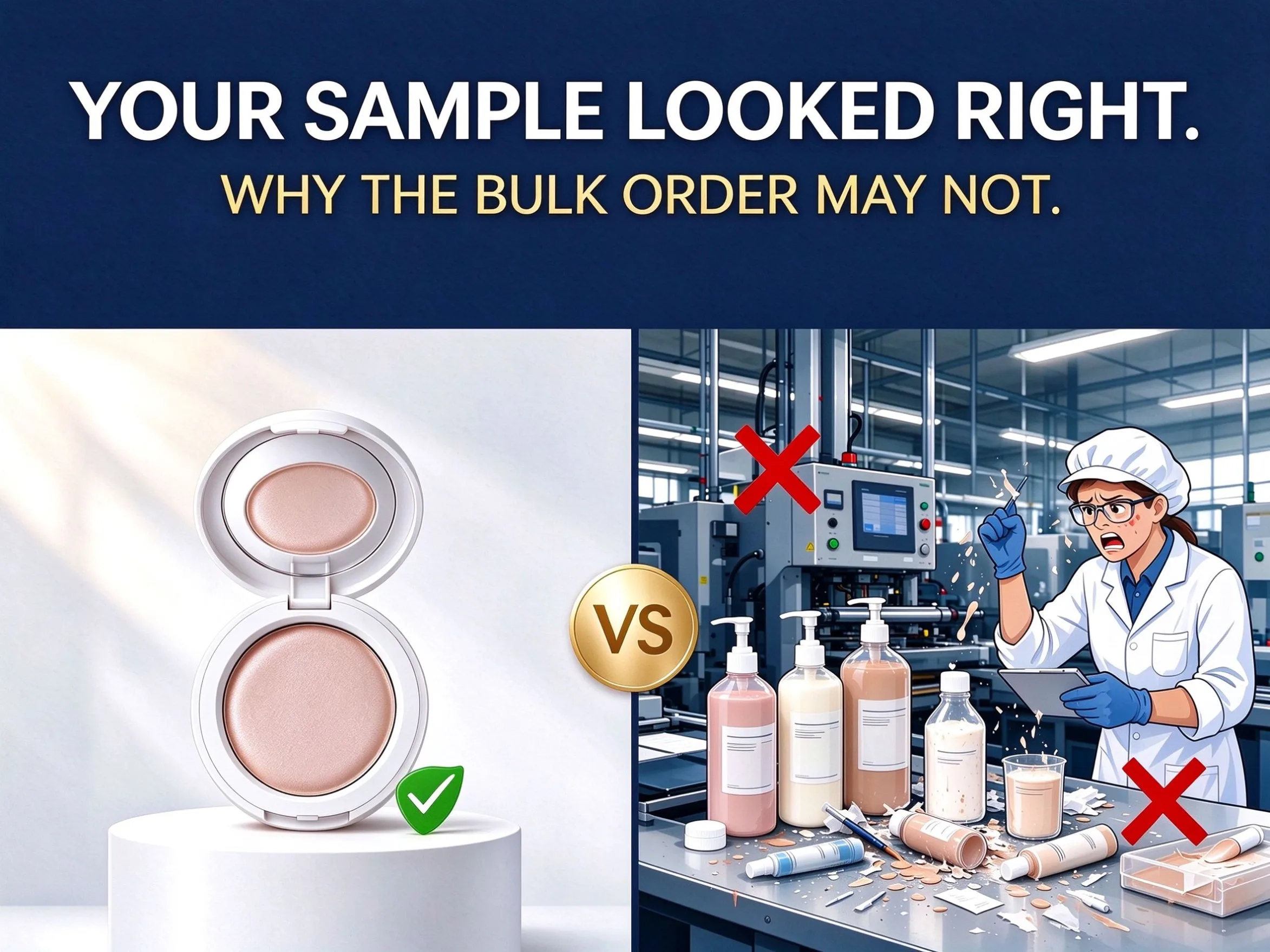
Your Sample Looked Right. Why the Bulk Order May Not.
A 500 g lab batch and a 500 kg production batch do not behave the same way. What changes, what tolerance is normal, and how the approved sample is locked before the run.
The worry behind the question
The sample was approved. Then the cartons arrive and the shade looks a little warmer, or the texture feels slightly different. This is one of the most common concerns before a first bulk order, and it is worth explaining plainly: a lab batch and a production batch are made at very different scales.
Why the scale changes the result
A sample is mixed in a small vessel where temperature, shear and weighing are easy to control. A production batch is mixed in a much larger vessel, where the same formula behaves differently: powders disperse over a longer time, heat builds up and dissipates unevenly, and small weighing differences become visible in a large batch. The formula is the same; the physics around it is not.
What a normal variation looks like
Small differences in shade and texture between an approved sample and a bulk batch are normal. The practical way to manage them is a reference sample: the approved sample is sealed, dated and kept as the standard for the run, and production is compared against it rather than against memory.
What gets locked before production
Before the run we confirm the shade reference, the fill weight, the cap and tube lot, and the packing configuration. Where a colour needs a closer match, a pre-production sample from the actual production batch is approved before filling continues.
What to check on arrival
Open one carton from the middle of the shipment, not the top. Compare the shade against the sealed reference under daylight, check the fill level across several units, and check the cap fit and the label position. If something looks off, photograph it next to the reference and send it before the cartons are moved into storage - that is the point where a batch can still be traced.
The short version
Ask for a sealed reference sample, agree what tolerance is acceptable, and check one middle carton on arrival. Those three habits remove most of the surprise from a first bulk order.