Oct 21, 2026Buying Guides
Fill Volume, Diameter, Carton Count: How to Read a Cosmetics Spec Sheet
Most shipping surprises start on the spec sheet. What fill volume, bottle diameter, units per carton and gross weight actually mean, and which numbers to confirm before the PO.
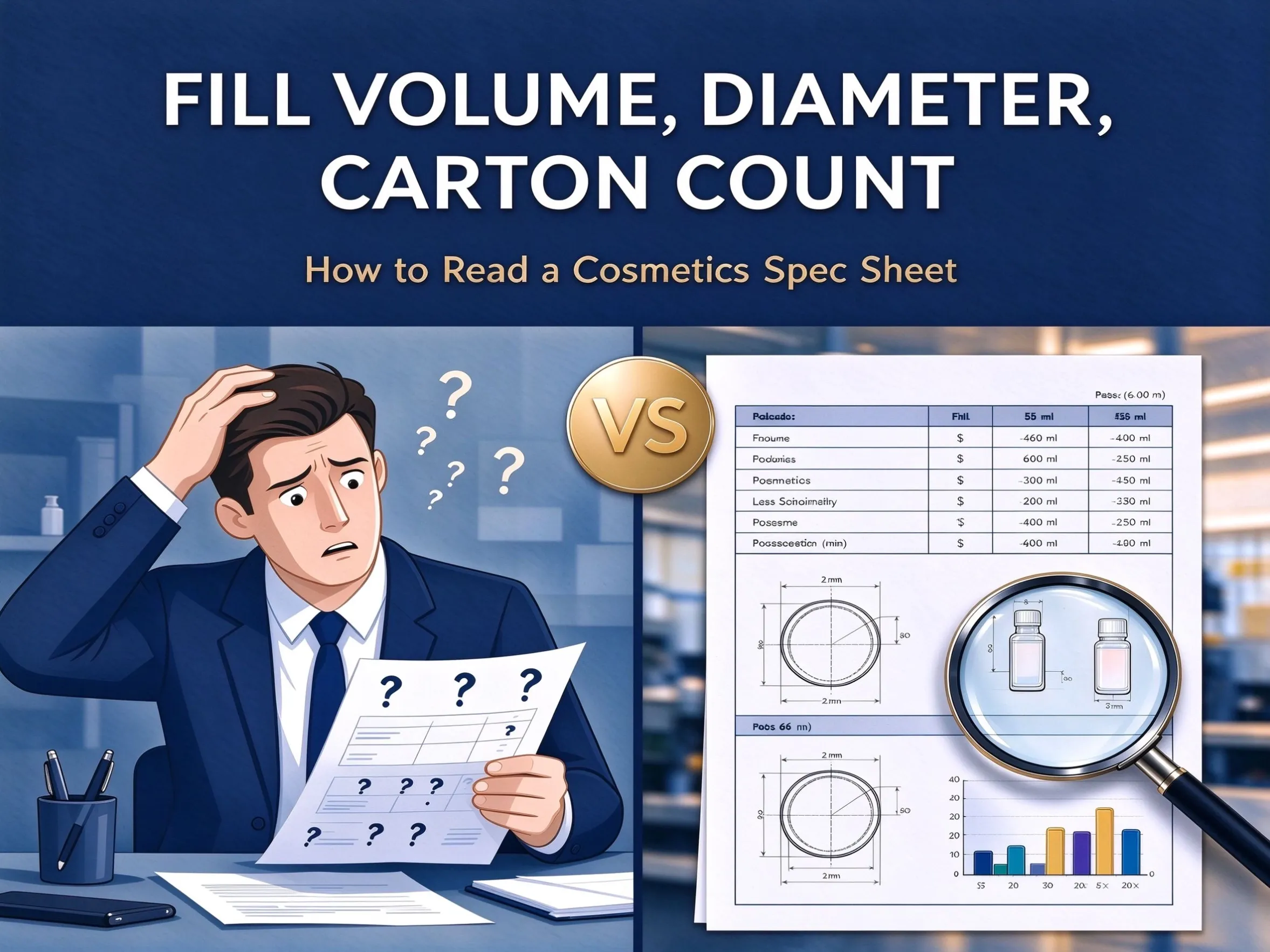
The numbers that decide the freight
A spec sheet looks like a formality until the cartons arrive and the pallet count is wrong. Four numbers drive most of the difference between the quote and the invoice: fill volume, bottle diameter, units per carton and gross weight. Here is what each one means in practice.
Fill volume is not bottle size
Fill volume is how much product goes into the pack; bottle size is the outside dimensions. A 6 ml fill can sit in packs of different heights, and the empty space above the product changes both the look and the weight. When a page lists a fill volume, treat it as the product quantity, not the pack size.
Diameter decides the label and the display
The diameter sets the printable label area and how many units fit on a shelf or in a display box. Two packs with the same fill volume can have very different diameters, which changes the label artwork and the number of facings per shelf. Confirm the diameter before artwork is finalised.
Units per carton and carton size
Units per carton, carton dimensions and gross weight together decide the pallet count and the freight class. A small change in carton count can move a shipment from one pallet to two. Ask for the carton configuration in writing with the quote, not after the deposit.
Net weight and gross weight
Net weight is the product; gross weight includes the pack and the carton. Freight is quoted on gross weight and volume, so the number that matters for shipping is the gross figure, measured per carton.
What to confirm before the PO
Before the purchase order, confirm five items in writing: fill volume, pack diameter, units per carton, carton dimensions and gross weight per carton. If any of them is still open, the freight quote is still an estimate.