Buying Guides
Two OEM Quotes, Different Numbers: How to Compare Them Line by Line
Two OEM quotes for the same product rarely cover the same scope. Here are the line items to compare before you pick a supplier on price.
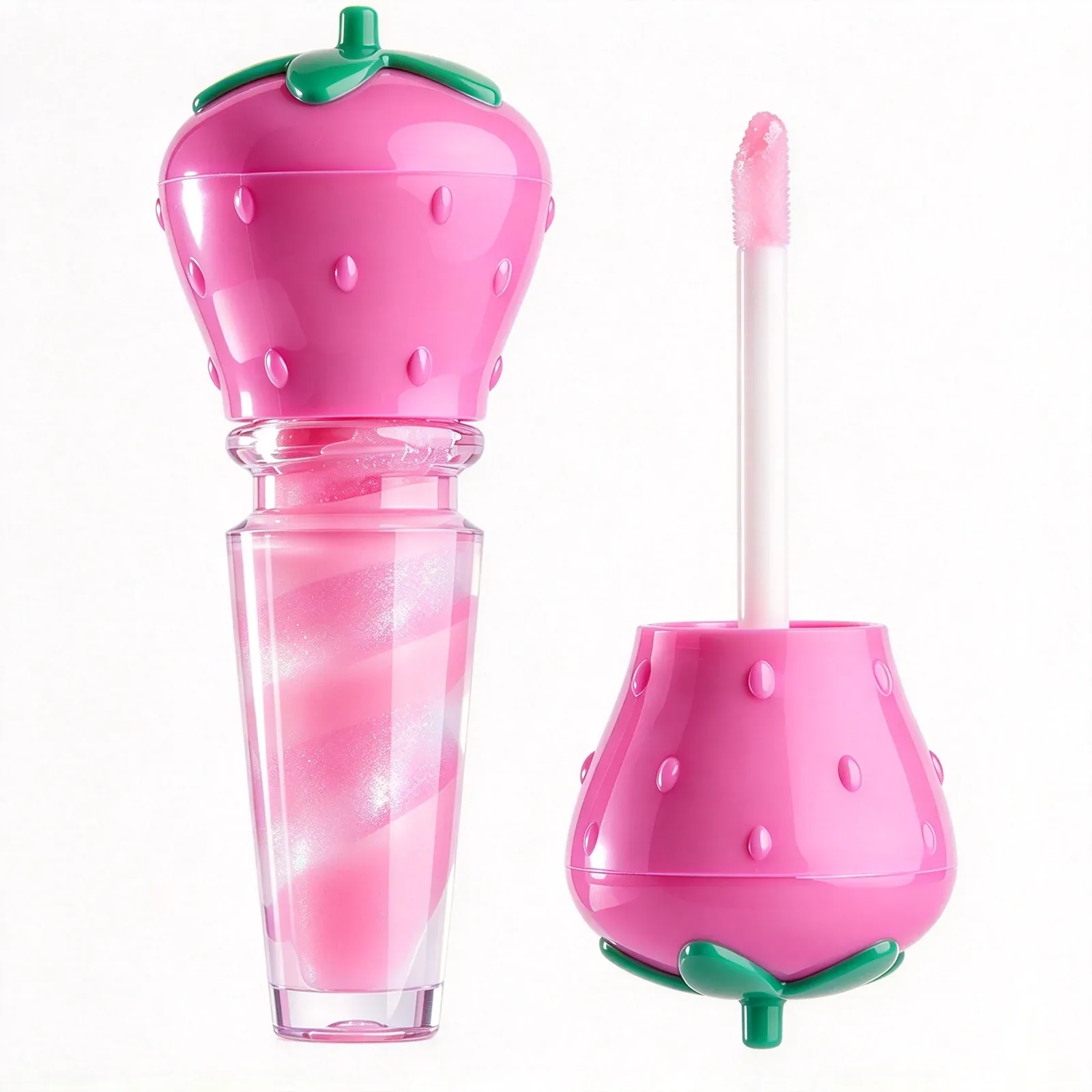
Two quotes for the same lip gloss can differ by 40% and both be honest: one includes the component and the other quotes bulk only; one includes decoration, testing and cartons, the other lists them separately. Comparing the headline number without the scope is how buyers end up with a cheaper quote that costs more.
The line items to ask for
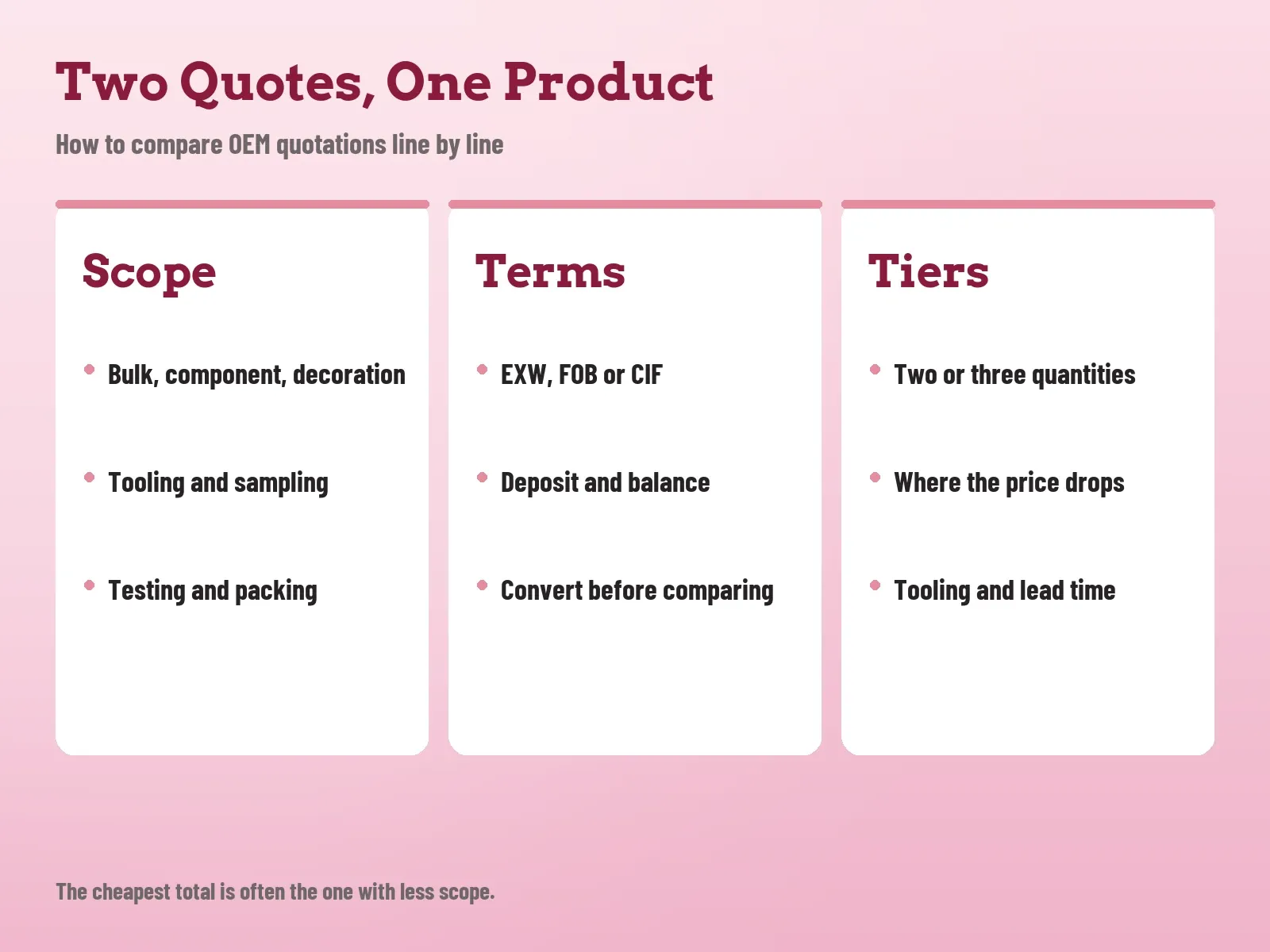
Ask every supplier to quote the same seven lines: bulk formula per kg or per unit, component, decoration, tooling, sampling, testing and packing. Add the Incoterm and the payment terms. A quote without those lines cannot be compared.
What "included" usually hides
"Price includes packaging" can mean a stock jar, or it can mean the jar is quoted at cost and the decoration is extra. "Free samples" may exclude courier and the second round. "Testing included" may cover microbiological but not stability. Ask for the exclusion list, not just the inclusion list.
MOQ tiers and price breaks
Quotes should show price at two or three quantity tiers, because the component minimum often sits between them. A supplier who only quotes one tier cannot show you where the price actually drops.
Payment and Incoterms change the number
EXW, FOB and CIF produce different landed costs even at the same unit price. Deposit percentages and balance timing also affect cash flow. Put both quotes into the same Incoterm before comparing.
A one-page comparison
Build a table with the seven lines across the top and the suppliers down the side; convert everything to the same Incoterm and the same quantity; then compare the total, the tooling and the lead time. The cheapest total is often the quote with the least scope.
A worked example
Quote A is 1.20 per unit bulk only, FOB. Quote B is 1.45 per unit including the tube, decoration and carton, CIF. Convert B to FOB, add the tube and decoration to A, and the gap usually narrows to a few cents. What is left is often the component grade or the number of print passes.
Ask each supplier what happens at the second quantity tier and whether tooling is one-off or charged per order. Those two answers decide the real cost of the first run more than the headline unit price.
Send us your current quotations and target quantity, and we will lay them out on the same lines so the comparison is fair.